The Wise Report Provides Government Updates for Areas of Interest to HGS Professionals.
Check out the Latest Wise Reports below...
Release Date: 13 January 2016
Release Date: 2 January 2016
Release Date: 1 January 2016
Release Date: 20 December 2015
Release Date: 6 December 2015
Release Date: 1 December 2015
Release Date: 21 November 2015
Release Date: 12 November 2015
Release Date: 9 November 2015
Release Date: 7 November 2015
Release Date: 1 November 2015
Release Date: 31 October 2015
Release Date: 17 October 2015
Release Date: 16 October 2015
Release Date: 1 October 2015
Release Date: 30 September 2015
Release Date: 20 September 2015
Release Date: 1 September 2015
Release Date: 30 August 2015
Release Date: 26 August 2015
Release Date: 25 August 2015
Release Date: 17 August 2015
Release Date: 26 July 2015
The Houston Geological Society is powered by a community that cares.
Your donation supports students, technical programs, outreach, and the partnerships that strengthen our geoscience community. If HGS has helped you learn or connect, please consider giving back
2016 Nominations for HGS Teacher of the Year Award
The HGS Teacher of the Year has been established to honor individuals whose extraordinary efforts or unique contributions are in earth science education. The selected Teacher is given a $500 cash award along with a plaque presented at a HGS Event. The HGS Teacher of the Year will be encouraged to apply to the GCAGS and AAPG Teacher of the Year Programs which offer greater cash bonuses ($1500 and $5000 respectfully) . Below are the requirements and procedures for applying for the award. All application materials should be mailed to the HGS Office at Houston Geological Society, Attn: Awards Chairman, 14811 St. Mary’s Lane, Suite 250, Houston, Texas 77079-2916. Questions can be sent to Mike Deming HGS Awards Chairman at mike.deming.HGS@gmail.com.
Requirements
All applicants must adhere to the following requirements in order to be considered for the Houston Geological Society Teach of the Year Award:
The unit will be evaluated on depth and breadth of concepts (resource origin, discovery, processing, usage, and reclamation), creativity of presentation and balanced treatment of information regarding societal need and environmental issues. Please include the length of the unit.
Materials:
You will need four documents to complete this application.
1. Your teaching philosophy and methods of the teaching of natural resources (both content and pedagogy). (1-2 pages)
2. Description of the unit you teach. (1-2 pages)
3. Letter(s) of recommendation from a colleague
4. Letter(s) of recommendation from a administrator.
Submission
AAPG House of Delegates Election – 2016
Each year some number of AAPG HGS area delegates to the AAPG House of Delegates see their terms expire come June 30. New delegates must be elected and alternates also voted upon to fill vacancies as they occur. Currently 30 delegate terms will expire on June 30, 2016. Due to membership changes, 29 delegates plus alternates will be elected to replace those whose terms expire. These delegates and alternates will serve from July 1, 2016 through June 30, 2019. HGS elects other delegates (and alternates) on staggered three-year terms. There are 15 delegates whose terms expire in 2017 and an additional 3 delegates whose terms expire in 2018.
Candidates for AAPG House of delegates have these responsibilities:
· Attend monthly AAPG HoD meetings as scheduled by the Houston delegation chairman.
· Attend the annual HoD meeting at the ACE conventions from 2017-2019, Houston (2017), Salt Lake City (2018), and San Antonio (2019).
· Alternate delegates will ascend to vacant delegate positions in the order of received votes. In 2016 there are 34 candidates for 29 delegate positions. The highest 29 vote recipients will be delegates, the next 5 will serve as alternates.
· Must be an active, current dues-paying AAPG member. Current active HGS member status is encouraged.
The following HGS/AAPG members have agreed to run for AAPG delegate positions. Their information will be published in the April 2016 HGS Bulletin. Anyone wishing to run for AAPG delegate can contact Ken Nemeth, HGS Nominations Committee Chairman. Deadline for nominations is January 31, 2016.
Robert Archer Bob Ardell
Martin Cassidy Gary Coburn Cheryl Desforges Craig Dingler
Steve Getz Tarek Ghazi Gretchen Gillis Rusty Goetz
Laurie Green Jaka Hardiwinangun Paul Hoffman Barry Katz
David Kronman Rosemary Laidacker Steve Levine Hunter Lockhart
Claudia Ludwig Bill Mathews Evelyn Medvin Ronald Meers
Bonnie Milne-Andrews Kenneth Mohn Clint Moore Robert Pledger
Rusty Riese Patricia Santogrossi Carl Steffensen Mike Strickler
Justin Vandenbrink Wayne Xu
YOUR Time to Take Action!I never had any intention of becoming an HGS Board member. I have always loved attending the HGS dinners and events for the camaraderie and casual networking, but to participate as a Board member? It never crossed my mind! I simply preferred to socialize, attend field trips, and surround myself with those who were much more experienced and knowledgeable than myself, hoping to learn by osmosis. (Written by Tami Shannon, HGS Editor-elect) |
So, when Barry Katz emailed me eight months after we had discussed the potential Editor position (at an HGS Guest Night function with cocktails, no less), to say I was hesitant to accept the initial nomination is an understatement. I had no time, I definitely didn’t have enough experience, and frankly, I had no idea what the position entailed. It seemed way too challenging to try to fit that responsibility into my already frenzied schedule. Nonetheless, my adventurous spirit couldn’t turn down this challenge even if I wanted – so I accepted that nomination. But wait… Editor-elect is actually a two-year term?
So, I am privileged to have been voted into HGS leadership during interesting and uncertain times in our industry – and I’m excited! I know it may seem unsuitable to get enthusiastic about these kinds of changes, but let’s be truthful: change is always a good thing. It spices things up; it puts you on a new path – even when you aren’t quite ready for it. Consequently, here I am, writing a column that I never dreamed of writing, eager to inspire every HGS member to take just a little bit of action to actively participate – no matter how small the effort seems.
We are each responsible on some level to pass on our passion and remind each other why we decided to embrace this industry. Students, NeoGeos, Legends in industry – we can all help contribute our own passions to inspire our fellow members. I challenge each of you to take some action:
Get Connected – update your profile on the HGS website. As HGS members, one of the most powerful tools we have at our disposal is our network! Bonnie Milne and the Directory Committee are spearheading efforts to modernize and update the HGS Membership Directory (see page 41). The goal is prepare a robust and searchable database via the HGS website as well as via PDF. This is a great tool to re-connect with or simply introduce ourselves to each other. Please go on the website https://www.hgs.org/user and check out your profile to insure it is accurate and up-to-date so that others can get in touch with you.
Get Inspired – introduce yourself to someone new. We want to invite you to contribute your story – if you are employed, tell us more about what you do. If you are unemployed, tell us about what you did and where you want to go next. Why did you get into the industry? Why do you still want to be in it during this downturn? One of the most rewarding aspects of my role is that I get to interview the family of HGS members who have passed away and find out how amazing they were and I get inspired all over again! I wish I had known each of them in person so I could carry on their infectious enthusiasm for their work.
Get Involved – give a presentation or volunteer for a committee. Perhaps offer to present on a topic in your area of expertise, or simply just help collect money for an event. Love taking field trips? Why not help lead a committee to coordinate one? There is no better way to learn about the industry than to surround yourself with those who have already done it. For a list of committees and committee chairs contacts, please visit http://www.hgs.org/cmte_contacts.
Get Knowledgeable – attend HGS events. This one speaks for itself – get out there and MEET each other and learn about what is happening (and not by osmosis) ! If you don’t know where to start, I would encourage you to go to HGS Legends Night in January – what a great way to start the New Year! I will be there – come by and introduce yourself. I would love to meet you!
Get Nominated – or Nominate Someone Else. This is where we really need you to take action. HGS Board and AAPG House of Delegates are looking for nominees to participate! The Board is the best place to take what you would like to see improved in HGS and take strides to make it happen. Most people like the idea of being involved, but simply don’t think they can make the time, or perhaps they are not aware of how to do so.
So, once a month, for about 2-3 hours, I get to eat and drink among industry peers with varying levels of age and experience. I get to brainstorm on how to help improve our industry and help our fellow members who might need support and guidance during these trying times. I get to vote, accept, and reject these initiatives (most of which I would say are accepted) and I get excited to be a part of something a bit bigger than myself – a place where ideas have a possibility of coming to fruition. I get opportunities to meet all different types of interesting people: committee members, families of HGS members who have passed, and HGS members who simply introduce themselves to me and want to tell their story. I hope you come join us!
For more information on becoming the HGS Editor (or some other cool position), please get in touch with me, Tami Shannon, at tami.shannon.biz@gmail.com. You may also review the HGS By-Laws at http://www.hgs.org/sites/default/files/HGSConstitutionAndBylaws_approved...
For more information on the AAPG House of Delegates nominees, please check out http://www.hgs.org/aboutAAPGdelegates or contact
Justin Vandenbrink at justin.vandenbrink@weatherford.com.
|
In the Your Board in Action column this month, Editor-elect Tami Shannon has eloquently outlined some of the key benefits of stepping-up our participation in HGS activities, especially in these uncertain times when maintaining and building our professional networks, and technical knowledge, is so important. Allow me to augment Tami’s good message by also encouraging your involvement in volunteering opportunities beyond HGS. I’ll highlight one example (among many) of how we Houstonian geoscientists can have a positive impact on our colleagues around the world—befitting Houston’s privileged status as the capital of the global petroleum industry. |
The American Association of Petroleum Geologists (AAPG) Publication Pipeline Committee’s (PPC) primary goal is to be a “pipeline” of donated geoscience publications, both books and journal sets, to requesting and qualified overseas universities. Shipments are made with the assistance of AAPG members and staff, AAPG Student Chapters, affiliated societies, and companies with overseas operations. The PPC’s base of operations is right here in Houston, at 6830 North Eldridge Parkway. To date the committee has shipped to more than 50 universities in 18 countries, reaching an untold number of geoscience students and faculty.
Founded in 2000 by my former Amoco colleagues Martin Cassidy and Rick Wall, the PPC currently has a total of 11 members based in Houston as well as a number of other members and “friends of the PPC” scattered around the world that periodically assist in gathering donated publications, as well as identifying and facilitating contact with potential university recipients. By 2013, the PPC had shipped more than 100 tons of geoscience publications to universities around the world, and the committee is proud to announce it is already approaching the 200 ton milestone (see graph on page 9).
AAPG PPC members have the opportunity to “champion” specific donations/shipments, wherever potential university recipients can be identified. “Championing” involves making sure that the necessary documents formalizing the request are submitted from university officials to the PPC, determining the maximum quantity of publications that the university can shelve in an accessible space protected from the elements, engaging the services of an international shipping company willing and able to ship the inventoried/boxed/palletized publications to locations that are sometimes quite remote, and seeking organizations to serve as sponsors to help facilitate importation and/or underwrite the costs of the shipment.
I’ve had the pleasure of seeing the successful conclusion to one of our most recent PPC projects, for which I served as “champion,” to Yangon University and other universities with geoscience departments in Myanmar, Southeast Asia. AAPG, the Myanmar Geosciences Society, Chevron, Schlumberger, and Statoil all kindly offered to co-sponsor a PPC shipment. As Myanmar (formerly Burma) was essentially closed to the outside world for nearly 5 decades, the need for building/modernizing their university library collections in this country is even greater than usual. When I visited the Geology Department at Yangon University back in August 2014, the most recent hardcopy publications in their small library dated from the early 1960’s. And like many places, there is still no access, or at best difficult access, to the online publications that many of us now take for granted.
Fortunately, earlier in 2014 the PPC had received a very generous offer of the entire library collection of the UT Austin Bureau of Economic Geology’s (BEG) Houston Research Center, which contained the bulk of the former library of Unocal that had been donated to the BEG by Chevron after the merger in 2005. The BEG Houston library ended up filling 60 pallets, the equivalent to almost a kilometer of shelved publications. Normally, a university library would have difficulty accommodating such a large additional volume of books and journals, but in another stroke of good fortune for the project, the Government of Myanmar in recent years had ordered that the Geology Department and other departments at Yangon University be decentralized, and students and professors spread around the country at many different universities outside the capital. This resulted in many spare, unused classrooms in the home of Yangon University’s Geology Department, Mandalay Hall, a substantial 3-story building built during the British colonial era. The last challenge in ensuring the collection could be properly housed for use by students and faculty was the need for a significant number of bookshelves for those empty former classrooms, now to be converted to library space. For that, various members of the Myanmar Geosciences Society (an affiliate of AAPG) came to the rescue, and either donated existing bookshelves or offered to fund the construction of new ones. A happy ending, indeed.
Current “core” (Houston-based) members of the PPC are: Art Browning (Chairman), José Guzman (Treasurer), yours truly (Secretary), Martin Cassidy, Chuck Caughey, Elizabeth Desser, Dave Drowley, Gretchen Gillis, Brian Wall, Meagan Wall, and Gerrit Wind. As the efforts of the committee continue to grow, we will need more “hands on deck,” so we would love to add your name to the PPC members list!
Anyone interested in either 1) becoming a member of the PPC, or 2) donating the part of your personal geoscience library that’s gathering dust, please contact me at jonblickwede.hgs@gmail.com or (832) 228-6593. It’s a fun and fulfilling way to “pay it forward” to new generations of professional geoscientists around the globe!
All the best to you in 2016!
The Wise Report
Henry M. Wise, P.G.
December 20, 2015
The TCEQ has announced updates to the Texas Risk Reduction Program (TRRP) Tier 1 Protective Concentration Levels (PCLs) are now available. You can access these tables at: http://www.tceq.state.tx.us/remediation/trrp/trrppcls.html.
The 2015 PCL table update is a single Microsoft Excel workbook with each table on a separate worksheet. The updates are availabl as a print only Adobe Acrobat portable document format (PDF) file. The Excel file and the PDF file each contain PCL tables 1 through 10 and the supporting tables in the following order:
The PCL tables updated in November 2014 were the most recent tables prior to this release. A guide to the correct interpretation and use of the Tier 1 PCL tables can be accessed at the following link: http://www.tceq.texas.gov/publications/rg/rg-366_trrp_23.html
For additional information on the PCL tables, contact Mike Aplin at mike.aplin@tceq.texas.gov
Henry M. Wise, P.G.
The Wise Report
12/20/2015
The Wise Report
Henry M. Wise, P.G.
December 6, 2015
On Sept. 24, 2015, the EPA signed the final rule which requires NPDES regulated entities to electronically submit specific permit and compliance monitoring information instead of filing paper reports. This rule will be implemented in two phases. Phase I becomes effective on Dec. 21, 2016, and Phase II becomes effective on Dec. 21, 2020. The following is a brief summary of the Phase I and Phase II requirements as they apply to NPDES regulated entities.
Phase I Requirements – effective Dec. 21, 2016
Phase II Requirements – effective Dec. 21, 2020
If you have any questions concerning the NPDES Electronic Reporting Rule, please contact Small Business and Local Government Assistance at 800-477-2827.
---------------------------------------------------------------------------------------------------------------------
As has been discussed previously, the TCEQ will require all soil confirmation samples for volatiles and TPH be collected using EPA Method 5035, beginning January 1, 2016. I asked Anne Strahl, with the TCEQ about the need to use EPA method 5035 for TPH being collected in conjunction with UST sites, since TPH is only used as a screening tool to determine which soil sample(s) will be analyzed for PAH. She said that EPA Method 5035 would not be required in this case. However, it would be required if the site were subject to TRRP, since TPH can be used to help close a site. You will still need to use EPA Method 5035 for volatiles under both the UST and TRRP rules.
Henry M. Wise, P.G.
The Wise Report
12/6/2015
Happy Holiday From Your Board!As I am writing this, I am sitting in a software booth at the SEG Annual Convention in New Orleans. As one might expect, it is lightly attended — a sign of the times in our industry. |
Nevertheless, I am happy to report we had a better than expected turnout at the 2015 GCAGS Convention, with a total attendance of 1,292 attendees. However, not as many people took advantage of the short courses, field trips and luncheons as we had hoped, as I believe people were trying to conserve dollars, and use the event for networking. This tells me that “destination conventions” in the next few years may be difficult for attendance and making extra money for all these organizations may be a challenge.
The HGS Board has been discussing ways in which we can help ease the pain people are feeling during this period of low commodity prices. One thing the Board voted to do is extend student membership status for those who have graduated, but have not yet found a job. Currently students get a significant price break on HGS dinner and luncheon meetings, which helps their budget, while allowing them to gain knowledge from the technical program. AAPG has a policy to help students “transition” to full membership which carries them through two years after graduation. The Board decided to accept this policy as well.
Another way in which we are attempting to help is to offer a discount to members who are unemployed and want to attend luncheons and dinners, but are struggling financially. This process requires calling the HGS office to request such a discount, and is heavily reliant on the honor system… but it is one way the HGS can help mitigate costs for our members.
This continues the theme I started earlier this year for the GCAGS Convention — which is, if you still have a job, please sponsor attendance at a technical presentation for someone who doesn’t! It doesn’t cost much, and you might help someone find a significant contact through networking opportunities, and gain technical knowledge at the same time!
So next month is our Legends Dinner! I would like to remind everyone that the Legends Dinner is the primary way the HGS raises funds for both scholarship programs. We expect a full house this year, as the theme is “Geophysicists Who Have Made a Difference in Geologist’s Careers,” and our key speakers are Tom Smith, founder of Seismic Micro-Technology, Alastair Brown, author of arguably the most popular book on 3-D seismic interpretation, and Peter Duncan, who has helped many people understand what is going on with their fracs with micro-seismic data. Sponsorship is a key element to making sure the Foundations are funded for next year’s students. It is completely tax deductible (for those of you who have that consideration at the end of the year), and definitely goes to a great cause!
The Board is also talking about hosting new social events for next year. This would be to promote networking and trying to help people to make industry contacts outside their normal circle. We are thinking about having “Happy Hour” events at places around town. If you have some good ideas, please let us know!
So, from the Board to our members, we wish you a wonderful holiday season, and stay safe and positive. As with all down cycles, this one too will end.
Respectfully,
Deborah
|
With so much emphasis placed on the development of new technology for finding oil & gas, and rightly so, we sometimes forget that there are some old tools and techniques that still retain their usefulness. The most ancient of all methods for petroleum exploration was first applied by early man, who discovered that a sticky black substance (biodegraded oil, or pitch) found in certain places at the Earth’s surface, was an effective sealant/caulking material. |
During my expatriate assignment for Amoco Venezuela in the 1990’s, some of my most memorable experiences were the various excursions I took into the Orinoco Delta, where we understood that the Government was planning to offer two large blocks in the First (and turned out to be the last) Exploration Bid Round scheduled for 1996-97. The delta of the Orinoco River is roughly the same size as Switzerland, but to this day still hasn’t a single road or other sort of modern infrastructure within the delta proper. By the 90’s, neither had any modern seismic been acquired in the interior of the delta, or oil & gas exploration wells drilled, despite the existence of two significant oil fields on the northern (Pedernales Field) and western (Tucupita Field) delta fringe. Nevertheless, we perceived there was a significant risk that the outer portion of the delta, where one of the blocks had been defined, might be gas-prone — this part of the delta being near to the gas discoveries and producing fields of the Columbus Basin offshore eastern Trinidad. And in those years (and probably to this day), a gas discovery in the remote Orinoco Delta would have been deemed non-commercial.
The main inhabitants of the Orinoco Delta are the people of the Guarao indigenous group, thought to have settled in this region thousands of years ago. The delta is not the most easily habitable part of eastern Venezuela, and it’s believed that the Guarao were originally driven into the delta seeking refuge from more belligerent tribes in the region. There is essentially no dry ground, so the Guarao communities are built on stilts along the banks of the distributary channels. And only a single type of fruit or vegetable, ocumo chino, or dasheen, can be cultivated in the perpetually soggy ground. As such, the limited diet of the Guarao consists of basically just two foodstuffs: the potato-like dasheen, and fish. The critical importance of the latter as their only significant source of protein means that the Guarao’s fishing technology is paramount to their survival. And an essential material for that technology is pitch from oil seeps, both to seal the ends of sections of bamboo that are used as floats/bobbers set out in the channels with line and hooks on which fish bait is attached, as well as caulk for their main transportation, dugout canoes made from mangrove trees. The Guarao name for pitch is oray. Thus, my primary strategy to search for oil seeps was to travel by boat from one village to another, and inquire if anyone in the community knew of any places nearby where oray could be collected. If they claimed to know of such localities, usually a group of men would immediately offer to guide me to the site, which typically would be a subaqueous spot in the mangrove jungle where they dove underwater and excavated in the mud with their hands and feet, emerging, amazingly, with nodules of pitch. How those hidden seeps might have first been encountered is still a great mystery to me.
I visited the environs of the exploration block in the outer delta, called Punta Pescador, on a few of my excursions. I was armed with a treasure map of sorts, a copy of an old report from a couple of geological expeditions in the 1920’s that hadbeen passed to me by a friend in Caracas, in which a number of oil seeps/pitch localities were documented in the area. The localities were marked on a series of roughly sketched maps, and using these in conjunction with my usual inquiries at the Guarao communities, I searched and searched for probably a total of three weeks, to no avail. Finally, during early December 1996, just before the bid deadline for Punta Pescador and the other nine blocks in the First Round, we were traversing a small channel where we’d been before, and lo and behold found a ~50 meter stretch of the channel with oil bubbling to the surface in a number of places and spreading out in a sheen. Samples were taken and hot-shotted back to Houston for analysis, which confirmed not only that it was indeed crude oil, but also revealed the chemical composition which correlated to oil produced at the Pedernales Field far to the west. Amoco management ended up deciding to place a significant bid (something in the neighborhood of USD 100 million, as I recall—a huge bid in those days) on the Punta Pescador block, and won. I don’t believe that any bid would have been made by Amoco unless that oil seep had been confirmed.
Later, 3D seismic was acquired in the Punta Pescador block by Amoco, and a wildcat was drilled in another part of the block than the oil seep. Though the well did not reach its ultimate objective, apparently only gas was encountered, and the license was dropped. But I still recall seeing and sampling that oil seep, and the ensuing excitement and impact it created.
You might have been hoping that I’d disclose the location of the seep in Punta Pescador. Well I’m sorry… that information is just too powerful. :)
The Wise Report
Henry M. Wise, P.G.
November 21, 2015
The Texas Board of Professional Geoscientists (TBPG) is proposing rule amendments to Chapters 850and 851 concerning the licensure and regulation of Professional Geoscientists. Many of the changes are for consistency and clarity. The two documents containing these proposed changes can be found at: http://tbpg.state.tx.us/wp-content/uploads/2015/11/Ch850-TXRegIssue-11-2... and http://tbpg.state.tx.us/wp-content/uploads/2015/11/Ch851-TXRegIssue-11-2....
Comments on the proposed amendment may be submitted in writing to Charles Horton, Executive Director, Texas Board of Professional Geoscientists, 333 Guadalupe Street, Tower I-530, Austin, Texas 78701 or by mail to P.O. Box 13225, Austin, Texas 78711 or by e-mail to chorton@tbpg.state.tx.us. Be sure to state which sections you're commenting on in the subject line.
---------------------------------------------------------------------------------------------------------------------
The TBPG has approved Draft Advisory Opinion #13 regarding:.
Is Texas P.G. licensure and/or firm registration required if a P.G. licensed in another state physically moves his or her firm to Texas and engages in the following activities:
The draft opinion states, "If the firm solicits and engages in work solely within another state, except for the office-based portion of the work (report compilation, administration, etc.); maintains licensure in the other state; and the LLC advertises that services are offered only in the state of licensure, the firm is exempt from TBPG registration."
You can submit written comments concerning this Advisory Opinion Request and Draft Opinion to: Charles Horton, TBPG Executive Director, P.O. Box 13225, Austin, Texas 78711, or by e-mail to chorton@tbpg.state.tx.us or by fax to (512) 936-4409. Comments must be submitted no later than December 27, 2015. Please reference Advisory Opinion Request #13.
---------------------------------------------------------------------------------------------------------------------
The TBPG has requested an opinion from the Texas Attorney General as to whether the Texas Board of Professional Geoscientists has implied authority under Occupations Code chapter 1002 to accept and place limits on the voluntary surrender of a license (RQ-0066-KP). Some licensees have expressed a wish to surrender their respective licenses before the natural expiration date. However, the Act is silent regarding a licensee's authority to unilaterally terminate the license, before it is scheduled to expire, and accordingly does not provide a process for doing so. The Act also is silent regarding the scop of the Board's authority to accept a voluntary termination by surrender.
For more information, please access the website at www.texasattorneygeneral.gov or call the Opinion Committee at (512) 463-2110. Briefs requested by December 7, 2015.
---------------------------------------------------------------------------------------------------------------------
The Railroad Commission of Texas proposes to amend §3.16, relating to Log and Completion or Plugging Report, to reflect changes in Texas Statutes relating to confidentiality of well logs, which were amended by Houst Bill 878 during the 2013 Legistative session. For more information go to: http://www.rrc.texas.gov/media/31172/prop-amend-3-16-well-log-confidenti....
---------------------------------------------------------------------------------------------------------------------
The Railroad Commission of Texas adopts amendments to §12.108, relating to Permit Fees, without changes to the proposed text as published in the September 11, 2015, issue of the Texas Register (40 TexReg 6005). The adopted amendments implement provisions of House Bill 1, 84th Texas Legislature (Regular Session, 2015), and, specifically, Article VI, Railroad Commission Rider 5, which requires the amounts appropriated from general revenue for state fiscal years 2016 and 2017 to cover the cost of permitting and inspecting coal mining operations. This appropriation is contingent upon the Commission assessing fees sufficient to generate, during the 2016-2017 biennium, revenue to cover the general revenue appropriations. For more information go to: http://www.sos.state.tx.us/texreg/archive/November202015/Adopted%20Rules...
Henry M. Wise, P.G.
The Wise Report
11/21/2015
Job Opportunity
Lone Star College–University Park is seeking an Adjunct Instructor of Historical Geology for the Spring 2016 semester. An earned Master’s degree with a minimum of 18 graduate-level hours in Geology/Geosciences is required.
Here is the course description:
4 Credits (3 hrs. lec., 3 hrs. lab.) A comprehensive survey of the history of life and major events of the physical development of Earth as interpreted from rocks and fossils. (4006015403) Prerequisite: College Level Readiness in Reading AND Writing; GEOL 1403 or departmental approval; MATH 0308
Student Learning Outcomes:
1. Describe how the application of the scientific method has led to our current understanding of Earth history.
2. Explain the historical development of Geology as a science and how it was influenced by early interpretations of fossil and the theory of evolution.
3. Communicate how principles of relative and numerical age dating have been used to develop the Geologic Time Scale.
4. Describe the processes involved in the formation and differentiation of the Earth and identify major milestones in the physical evolution of the planet.
5. Identify the major milestones in the evolution of life from its initial inorganic stages, through envelopment of the major animal and plant groups, to mass extinctions.
6. Explain how rocks and fossils are used to interpret ancient environments.
7. Identify the major tectonic events in the geologic evolution of North America.
8. Lab: Classify and interpret depositional environments using sedimentary rocks and fossils.
9. Taxonomically classify samples of geologically important fossil groups and use them to interpret the age of rocks on the Geological Time Scale.
Interested persons are invited to contact Maria (below) directly with a current resume and unofficial graduate transcript.
Maria Flores-Harris, Ph.D.
Faculty Recruiter
Lone Star College
Email: Maria.Flores-Harris@
5000 Research Forest Dr.
The Woodlands, TX 77381
Web: www.lonestar.edu
How to Update your HGS Member Profile
If you have not logged into your account, click here to log in.
Step 1: Click My Account (Upper right hand corner of Homepage)
Step 2: On the VIEW tab (your personal information will appear)
Scroll to the bottom and click on Edit Name and Address
Fill in your information and click SAVE after each entry.
When finished, go to My Account, EDIT
Step 3: Upload your Photo (located on the bottom of the EDIT form)
Step 4: Upload your Resume (WORD doc, docx or PDF)
Step 5: Click Save!
The Wise Report
Henry M. Wise, P.G.
November 7, 2015
The following information was provided by the Texas Board of Professional Geoscientists (TBPG):
On September 18, 2015 the United States Environmental Protection Agency (EPA) proposed to amend the new source performance standards (NSPS) for the oil and natural gas source category by setting standards for both methane and volatile organic compounds (VOC) for certain equipment, processes and activities across this source category.
TBPG's Appointed Board submitted a comment that Professional Geoscientists are licensed to ensure protection of human health and the environment and that Professional Geoscientist licensure should be considered as an appropriate accreditation for the EPA's proposed rules regarding the qualifications of an auditor.
This issue was brought to the TBPG's attention by Mr. Steven Fleming, P.G. The TBPG appreciates that Mr. Fleming identified the issue and worked with TBPG Board Members.
To view the TBPG Appointed Board's comments go to: http://r20.rs6.net/tn.jsp?f=001QuBHPZKwJFA6f81hgvUngfxHicnyPr5-VVBjOFTub...
The EPA is accepting comments from the public on their proposed rules until November 17, 2015. Comments can be submitted from the Federal Register website (instructions provided above).
To view the proposal, please go to the Federal Register at www.regulations.gov and type or paste the following into the search bar: EPA-HQ-OAR-2010-0505-4776
Background information for the TBPB's comments can be found at: http://r20.rs6.net/tn.jsp?f=001QuBHPZKwJFA6f81hgvUngfxHicnyPr5-VVBjOFTub...
As currently proposed by the EPA, a PE would be considered to be an appropriate auditor for this. A PG would not. You may wish to make your own comments.
---------------------------------------------------------------------------------------------------------------------
The TBPG has signed a new reciprocity agreement with the Louisiana Board of Professional Geoscientists. The agreement can be found at: http://tbpg.state.tx.us/wp-content/uploads/2015/11/Louisiana-Reciprocity...
Henry M. Wise, P.G.
The Wise Report
11/7/2015
Don't Ignore Your Tax Deductions!It’s hard to believe that I am writing a column for November when the temperature is still in the mid-90’s and the GCAGS Convention starts this coming weekend! Oh well, I guess the HGS Editorial Board needs to keep production on time. |
Considering we’ll be approaching the end of the year when this is read, now would be the time to address a couple of items of note. The first one is Legends Night 2016, which will be held on January 25th at the Norris Conference Center in the City Centre complex. More information will be forthcoming, but needless to say, Legends Night is important on many levels. We have world-class Legends this year with the theme being “Geophysicists Who Have Impacted Geologists.” Alistair Brown, Peter Duncan and Tom Smith are the featured speakers, with each commenting on the successes in their careers and how they have made an impact on the careers of other geoscientists. I certainly know how they have made an impact on mine!
Legends Night is important for another reason. It is a key component to supporting both the Calvert and HGS Foundation Funds, which in turn are the sources for undergraduate and graduate scholarships given by HGS to students each year. Without the significant monies brought in by sponsorship and attendance, there would be far fewer students getting financial support for their education! I would encourage everyone to put January 25th, 2016 on their calendar and make a point to come to this great dinner. We moved the venue to support a larger audience and have an excellent meal. Sponsorship is always welcome, and you can contact me, John Adamick, John Tubb, Jr. or the HGS office to find out how to sponsor and at what levels.
The second point to this column is an appeal to help both scholarship funds. I know money is tight, but there are probably a few who could still use a year-end deduction and this is an excellent way to get one! The HGS has a “Friends of the Foundation” group, which is looking for new members. Cost to get in is $100 (tax deductible, of course). This list will be published in the Bulletin on a periodic basis to acknowledge those who contribute to the two foundations. We are also looking for Sponsors for Legends Night, proceeds from which go to fund both foundations. So if you are looking for a great tax deduction for 2015, or want to start early with tax deductions for 2016 – please consider the two scholarship funds to assist you.
|
Most of us geologists have a love of maps — or at least we should, as we have to make and use them all the time. As an elementary school student in the northeast U.S., one of my favorite ways to spend a cold winter’s eve was to lie on the floor of the living room with the family World Atlas, sheets of tracing paper, pencil and eraser, and proceed to sketch rivers, lakes, mountain ranges, etc. from faraway, exotic realms of the globe. I would imagine how these places really looked, and dreamt of traveling there. I guess that’s the origin of my own affection for maps, and perhaps for geology. |
Despite their potential as vehicles for the imagination, most maps that we create and use these days are rather mundane affairs. They are exclusively designed to convey dry, spatial information of some sort, be it the streets of Houston or the distribution of allochthonous salt canopy in the Gulf of Mexico. If they have any aesthetic appeal at all, it’s probably unintended. It wasn’t always that way.
Erwin Josephus Raisz (1893-1968) was born in Löcse, Hungary, the son of an engineer, and initially followed in his father’s footsteps earning degrees in civil engineering and architecture from the Royal Polytechnicum in Budapest in 1914. After the Great War he emigrated to the United States, and worked at the Ohman Map Co. in New York City to support himself while he pursued a PhD in geology at Columbia University (Raisz, 1929). In a conversation I recently enjoyed with his grandson, Jonathan Raisz, he told me that the reason for Dr. Raisz’s switch from engineering to geology is unclear, though Jonathan suspects it may have been related to another part-time job he had in New York, making drawings of fossils in the collection of the American Museum of Natural History.
Regardless of how it came to pass, in addition to a number of renowned cartographic inventions such as the cartogram and the “Armadillo” map projection (Wired magazine, 2014), Erwin Raisz produced in his lifetime some 5000 hand-drawn, pen-and-ink “landform” maps, which must have required the patience of Job: they are beautiful renditions of the Earth’s surface that are fascinating to ponder. These maps could never have been automatically generated by a computer software application, but required the hand and sensibility of a human artist, convolved with the knowledge of a human geologist. Most of them were created during his 20 years at the former Institute of Geographical Exploration at Harvard University, where he taught, was curator of their map collection, and published the first comprehensive textbook in English on cartography (Raisz, 1938).
So what are these “landform” maps of Dr. Raisz? They are essentially physical relief maps, but use a set of realistic physiographic symbols that are derived from oblique views (excerpt copied here). The emphasis is on realistic symbols: “… the good symbol is that which can be read without an explanation… the [landform] map appeals immediately to the average man. It suggests actual country and enables him to see the land instead of reading an abstract location diagram. It works on the imagination.” (Raisz, 1931). According to Garver (2003), “He learned to know the land by its geological structure. Like a painter or sculptor who first approaches the human form by focusing on anatomy, Raisz instinctively read in a landscape the forces that molded it.” Spend a moment and take a close look at the excerpt from his Landforms of Mexico map reproduced here. It doesn’t take long before one is virtually transported to the Trans-Mexican Volcanic Belt, and sees with the mind’s eye the majestic Pico de Orizaba, Popocatepetl and other stratovolcanoes of the region.
Jonathan told me that his grandfather was also an avid photographer, and indeed, one of the resources on which he based his landform maps were the many photos he took while on an airplane, always taking care to book a window seat. He also used aerial photos, and in his last years even began to use astronaut photos from NASA’s Gemini program. So I suppose it can be said that Dr. Raisz was one of the fathers of geological remote sensing.
I’ve always been intrigued by the meeting of science (especially geology) and art, and Erwin Raisz’s maps have for me been one of the most inspiring examples of this confluence.
The Wise Report
Henry M. Wise, P.G.
October 31, 2015
On October 30, 2015, the PST Program issued a revised “Release Determination Report” Form (TCEQ-00621, Rev. 10/15) to be used to report the results from the investigation of a suspected or confirmed release from a UST or AST, or permanent removal from service of a UST or any routine environmental site assessment at PST sites. This form (TCEQ-00621, Rev. 10/15) replaces all prior versions.
The only modification to the form is to require additional information on the tank operators, tank owners, and property owners to ensure the TCEQ is dealing with the correct entity should an LPST number be issued. Release Determination Reports submitted on or after October 30, 2015 should be reported to the TCEQ on the revised form. Beginning April 1, 2016, all previous versions of the form will be considered obsolete and will no longer be accepted.
The RDR Form (TCEQ-00621, Rev. 10/15) is available on the TCEQ webpage: http://www.tceq.state.tx.us/remediation/pst_rp/downloads.html#IOM
Henry M. Wise, P.G.
The Wise Report
10/31/2015
The Wise Report
Henry M. Wise, P.G.
October 17, 2015
The aquatic life and human health surface water RBEL (risk-based exposure limit) tables have been updated and are available on the TCEQ website.
These tables can be found as the second category under the TRRP PCLs at the following link: http://www.tceq.state.tx.us/remediation/trrp/trrppcls.html.
They are also available as companion documents to, “Determining PCLs for Surface Water and Sediment (TRRP-24)” which is available with the TRRP guidance documents at: http://www.tceq.state.tx.us/remediation/trrp/guidance.html.
The following changes were made to the aquatic life table:
The following changes were made to the human health table:
The aquatic life and surface water RBEL tables will be updated periodically to reflect new state or federal criteria, changes to ecological screening benchmarks, and/or other information (e.g., toxicological data, persistence information). These revised tables should be used for TRRP submittals that involve releases to surface water. For additional information on the surface water RBEL tables, contact Vickie Reat at vickie.reat@tceq.texas.gov.
Henry M. Wise, P.G.
The Wise Report
10/17/2015
Are you interested in supporting your local high school in science and math? If you are, then the HGS is joining a Society of Petroleum Engineers-Gulf Coast Section (SPE-GCS)-lead program that will meet your aspirations!
Over the past year, the SPE-GCS, with leadership from Dick Murphy (SPE-GCS member and retired Marathon Oil Company engineer) have created a successful science in-class tutoring program at three high schools in Fort Bend ISD. Six SPE members volunteer at the high schools (Austin, Dulles and Clements) one or more days a week, mentoring and tutoring high school students in physics, chemistry or biology. These tutors work closely with the teachers, helping to explain the concepts to the students and giving them more individual attention. We recognize that in the greater-Houston area, there are many technical experts who have flexible daytime hours (retirees, unemployed, self-employed, part-time workers, college students) and might find this a rewarding opportunity. These six volunteers have found the experience personally very rewarding.
The SPE-GCS are seeking to expand this in Fort Bend ISD and to Katy ISD and need volunteer tutors for Fall 2015 who are willing to commit to a minimum of one half of one day per week helping in the classroom. Our experience shows that the day does not have to be the same day every week. However, the commitment helps to ensure continuity of effort, gaining the trust of the teachers, administration and students and keeping the tutoring program viable. The commitment does not preclude taking your vacations, as you are a volunteer. Show your interest by sending Dick Murphy (stancal@windstream.net) an email. This opportunity is open to anyone with science and technology skills. Feel free to share this invitation with others who might be interested. You are not required to live in these school districts in order to volunteer within them. If you find this opportunity interesting, but would rather volunteer at a high school in another school district, please drop him an email so he can gauge the interest of expanding the program elsewhere.
The HGS fully supports this effort and hopes that some of its members will sign up!
Click here to see more HGS volunteer opportunities.
Small Changes-Big ConsequencesChange is in the air at the American Association of Petroleum Geologists (AAPG) and your opinion matters! (Written by President-Elect: John Jordan.) |
A movement to change if and when new members are vetted is being discussed at AAPG headquarters and around the House of Delegates (HOD). One might ask, “Why should I care? I’m already an Active member of AAPG.” The AAPG membership application question is the tip of the iceberg of change to our organization being suggested by the AAPG Executive Committee (EC). Why? There is a belief by many members of past and present AAPG ECs that the AAPG is a dying society. I personally do not believe this to be true. This notion is pushed by AAPG leadership at nearly every AAPG HOD, Advisory Committee (AC) and EC meeting. To “save” AAPG, we are told, the entire organizational framework (Governance) needs to be updated to a model that looks very much like the AAPG of the early 1960s. Supporters have put their efforts into three areas. First, they want to reduce the minimum criteria to become an Active member of AAPG. Second, they would like to rewrite the AAPG bylaws marginalizing the significance of the HOD in AAPG. Third, they would change how money is shared with AAPG Affiliated Societies which includes the Houston Geological Society (HGS). We have been told that all of these changes are being considered to improve efficiency and therefore grow the AAPG.
Twenty years ago an AAPG Active member needed a degree in geology, five years of work experience and three AAPG sponsors. Today’s criteria are one year of work experience and one AAPG sponsor. This is currently less than the requirements for some who join the HGS. Many members of the HOD believe that the ultimate goal is to drop sponsors and possibly the work experience as well. Even the requirement of possessing a geology degree may be at risk, so that anyone with a few minutes and a credit card could potentially become an active member. It is believed that this efficiency will instantly increase AAPG membership. Is this what the majority of current AAPG members really want?
Rewriting the bylaws, marginalizing the significance of the HOD in the name of efficiency is the first step in moving the AAPG towards a small Executive Board. We have been told that a small board is more efficient and therefore a more desirable form of Governance. We must not lose sight that most future leaders of AAPG come from the AAPG HOD. Participating in the HOD is an excellent way to gain an understanding of AAPG and an avenue to learn leadership skills in a non-corporate environment. A small Executive Board was the original model used when AAPG was established and it led to a “good old boy” system which was rejected by a disenfranchised AAPG membership in the 1960’s. These members created the current structure to rein in the power of the Executive Board. In 1970 the HOD was created by the membership so that the members of the HOD with a controlling two-thirds vote had a vehicle to make changes to bylaws.
Finally, there is a desire to change how money is shared with AAPG-affiliated societies such as HGS. It is important to recognize that just like in HGS, AAPG membership dues and advertising in the AAPG Bulletin and Explorer magazine do not generate enough revenue to run the AAPG. Where does the money come from that keeps the AAPG running? The primary source of revenue for AAPG is the (North American) Annual Convention and Exhibition (ACE). Yes, ACE does include Canada. Generally speaking, the affiliated society that hosts ACE shares in the profit from the event held since they supply most of the volunteers that organize the technical program, courses, field trips and a large social event (at their own monetary risk). Without the local society volunteers, AAPG could not hold an ACE of the quality we have come to expect. This periodic influx of money is critical in the day-to-day operations of the HGS. The HGS runs a very tight budget every year until an AAPG convention comes to town and then we receive a percentage of the profit from that event. The HGS anticipates this surplus for our 5-year budgets. This single event every few years provides a small amount of extra income that we use to fund popular, large HGS conferences such as the Mudrocks, Geomechanics and Africa Conferences, among other uses.
The changes being discussed for the AAPG have far reaching consequences for members of both AAPG and HGS. Your elected delegates are here to represent your views, so reach out to them and have your voice heard. You can find a list of the members of the Houston HOD on the HGS web site, or better yet, call HGS Nominations Chair Ken Nemeth and volunteer to run for the HOD next spring!
|
Linguists estimate that there are roughly 3,000 words in the English language that are in common, everyday use. In contrast, my copy of the 1974 edition of the American Geological Institute’s (AGI) Glossary of Geology has about 33,000 entries, and that number has risen to nearly 40,000 in the latest (2011) edition. Is that too many? |
Language is both “a systematic means of communicating by the use of sounds or conventional symbols” and “a system of words used to name things in a particular discipline.”¹ The former definition has an intrinsic objective of effective communication, to ensure as much as possible that a particular concept is understood by the audience in precisely the same way as the person trying to convey the concept. The latter definition of language has no such built-in objective, and it is here that we geologists, just as all scientists, have run into the most trouble at times.
A classic example which illustrates the situation where the proposal of new geological words has gone berserk relates to the term “cactolith,” coined by Hunt et al. in their 1953 USGS Professional Paper 228 entitled Geology and Geography of the Henry Mountains Region, Utah: “The feeder to the Trachyte Mesa laccolith has a distinctive form and some may wish it named. ‘Cactolith’ might be used, and defined as a quasi-horizontal chonolith composed of anastomosing ductoliths whose distal ends curl like a harpolith, thin like a sphenolith, or bulge discordantly like an akmolith or ethmolith.”
For years I thought this was a serious (albeit comic) attempt to add a useful term to the geological lexicon, though I did once hear that Hunt and colleagues wrote this as a mischievous experiment to see if the term would pass the USGS editorial process, which it obviously did. Thus surviving the USGS editors, “cactolith” gained entry into the AGI Glossary, and some years later was even cited in the New Yorker magazine’s “How’s That Again?” column.
As it turns out, Hunt et al. did indeed intentionally propose the term in order to point out the plethora of geologic gobbledygook, at least in the field of igneous petrology. I recently discovered a 1988 publication by Hunt in which he clarified the origin of the name: “It was intended to call attention satirically to the absurd nomenclature geologists were developing by applying new names to the infinite variety of shapes intrusions can form. The name cactolith and its definition started July 1939 at what may be called elegantly a luncheon seminar on an outcrop of that feeder to the Trachyte Mesa laccolith...”
I’m sorry to report that the cactolith, which appears in my copy of the 1974 AGI Glossary, has apparently been declared dead as it was unceremoniously dropped from the 2011 edition. Perhaps it should be revived, not as a widely-used term for describing the zillions of igneous intrusive bodies around the world that look like a particular kind of cactus – but rather for the message it was meant to convey, about the importance of trying to keep our geological jargon as simple as possible. I suppose it could also be defended as having value as a candidate for crossword puzzles. In any case, the curious can visit Hunt et al.’s type locality about ¾ mile southwest of Trachyte Mesa, Garfield Co., Utah, just off State Route 276 about five or six miles south of the junction with State Route 95. I haven’t been there yet, but I’d like to do so someday, to pay my respects (see map on page 9).
I’ll finish up this month’s column with a general comment/opinion and some recommendations about technical writing. In today’s world, where documentation of our technical work is more likely to be done via PowerPoint presentations than traditional written reports, some might say that the importance of the written word has diminished. But I hope that even in PowerPoint presentations, or for that matter email, or social media, the economy of words and precision of written communication will always be important. Furthermore, I believe that geologic writing, when carefully crafted, can even contain an element of inspirational beauty; in this regard, the publications of W.R. Dickinson (e.g. 1974) come to mind, among others.
A couple of resources I’d recommend for helping to simplify and sharpen, if not beautify, our communications are Hansen (1991), and AAPG’s e-symposium Technical Writing Triage (aapg.org/career/training/online/e-symposia) which also incorporates useful tips for assembling effective oral presentations, and even resumes/CV’s. n
¹definitions from Terminology app, version 2.21, ©2012 Agile Tortoise Inc.
Dickinson, W.R., 1974, Plate Tectonics and Sedimentation: SEPM Special Publication No. 22, p. 1-27
Hansen, W.R., 1991, Suggestions to Authors of the Reports of the United States Geological Survey: U.S. Government Printing Office, Washington, http://www.nwrc.usgs.gov/lib/lib_sta.htm
Hunt, C.B., et al., 1953, Geology and geography of the Henry Mountains Region, Utah: USGS Professional Paper 228, U.S. Government Printing Office, Washington
Hunt, C.B., 1988, Geology of the Henry Mountains, as recorded in the notebooks of G.K. Gilbert, 1875-76: Geological Society of America Memoir 167
2014-2015
HGS Patrons of the Foundation
The Arena Energy Foundation
Noble Energy
Angela Hammond
John Adamick
John Tubb Jr.
HGS Friends of the Foundation
Carl Norman
Ken Nemeth
Leonard Atkins
Arthur Wakie
H. Cumming
John Sullivan
Henry Dean
P.G. Tungein
Dennis Kittler
David Morton
Frank Theall
Sarah Callner
Leighton Young
Lisa Goetz
Sidney Moran
Mitchel Cheney
Larry Jones
Dean Grafton
Glenn Lowenstein
Thomas Tourek
Gerard Haughey
Margaret Dalthorp
Irving Prentice
Mark Norvaille
Howard Kiatta
Paul Hoffman
Dean Callender
Andrew Traweek
Peggy Rice
Lisa Kay Tuck
Rowlands Geosciences
J.L. Schneider
Thomas Tucker
Keith Chandler
Hugh Hay-Roe
Sidney Moran
Kim Doud
Evelyn Goebel
Louise Duffield
Susan Black
Mike Allison
Michael Danahy
Kirk Hansen
Robert Zimmerman, Jr.
Deborah Ajakaiye
Kerry Campbell
The Wise Report
Henry M. Wise, P.G.
September 20, 2015
The Railroad Commission of Texas (RRC) is proposing changes in fees for each request for a groundwater protection determination letter stating the total depth of surface casing required for an oil or gas well facilities. In addition the current fees it's proposed to add a nonrefundable fee of $100 per each individual request for a groundwater protection determination letter. For more information, go to: http://www.rrc.state.tx.us/media/30320/prop-amend-3-78-gau-fee-sig-sept2...
Henry M. Wise, P.G.
The Wise Report
9/20/2015
Support the GCAGSWelcome everyone to another great year for the Houston Geological Society membership. We have exciting events for everyone this year starting with the GCAGS Convention this month. Of course we have exciting talks for September as well. |
You will find that I subscribe to the “Marlon Downey School of Short President’s Pages,” and, in fact, will be asking several of the Board members this year to put their thoughts in this space, rather than hearing from me all year. Hence, we have renamed this column Your Board in Action.
However, this being the inaugural column, I will step in and encourage everyone to sign up for the GCAGS Convention being held the 20th-22nd of September on the 3rd floor of the George R. Brown Convention Center. The HGS is the sponsoring organization, and, as such, have put a full court press in making this the best offering ever.
Larry Bartell has done an excellent job of putting together a list of volunteers to organize what could probably be the best technical and entertainment program we have seen at a GCAGS Convention in a long time! With Charles Sternbach holding court as GCAGS President, and Linda in charge of the technical side of the convention, it should be a wild success! Richard Ball has organized a fun event at St. Arnold’s Brewery, and Sally Blackhall has cool stuff working in the Hospitality Suite, which is available to all attendees, not just spouses.
The only one not having as much fun is Jeff Lund, who is our premier money raiser. Understandably, with product prices being low, finding sponsors has been tough for Jeff, but he has done an excellent job, given the circumstances.
With this in mind, I would like to appeal, on Jeff’s behalf, to those companies who have turned him down saying “I am laying off people, so why would I be a sponsor?” Sponsorship does not have to be in large amounts! One thing a company is doing when they offer to sponsor, is help bring technology to unemployed or under-employed geoscientists, perhaps the very people they have had to cut. The GCAGS Convention is a great place to network, learn new technologies, and reconnect with people from areas outside Houston. What would be wonderful is if the companies would actually “treat” their employees who have been terminated to a registration! In fact, for anyone out there – if you know of a geoscientist who is struggling due to being terminated – and you have a good job, please treat them to a registration! Sponsors also get a lot of recognition, regardless of how much you have given. If you’d like to see your company get the recognition it deserves, sponsorship is one way to get there.
The GCAGS is offering reduced rates for courses and field trips to help those who are not working right now… but they have to register to take advantage of those subsidies, which may be more than they can afford. It would be a wonderful “gift” to register a friend or a fellow ex-workmate for the convention this month, and it is not too late to do so!
Also, Jeff is not just looking for the BIG dollars. Contributions of any size are always welcome – as there are so many activities that need financial assistance. It all adds up – and it all helps! Something as small as $500 or $1000 can purchase extra food for the Hospitality Suite, or even a few extra gallons of coffee for the Convention floor. The price of coffee from the vendor for the Convention, with tax and extras is running about $121.00/gallon! That is equivalent to $5082.00/ barrel… maybe we are in the wrong business. But this is just one example of the costs associated with putting on this convention, and why it is necessary to get ample sponsorship to cover the various events and amenities. They are trying to keep the costs down for registration as much as possible… so small sponsorship amounts DO help!
So if you have turned down Jeff in the past, give him a call and offer to help our fellow geoscientists have access to great technology and networking opportunities. Who knows, in a small way, you may be helping them find a replacement job.
In closing, I will say I am working with some wonderful people on the Board this year. We have several “YP’s” (Young Professionals) on the Board, and there is already a difference in “energy” in the air. Everyone is aware of budget constraints, but no one is complaining, just looking at ways they can make a difference – so it should be a very fun year.
Looking forward to seeing all of you at one or more HGS functions this year!
|
It was a big early 20th century gusher… but it wasn’t the famous Spindletop well drilled in 1901 near Beaumont, Texas, or even any of the many super-prolific oil wells of the Middle East. |
Welcome to the first of my From the Editor columns. It’s about a piece of oil industry history which I hope you’ll find inspiring, as it has been for me. Inspiration is one of the themes I have decided to use for my allotted ten columns for the 2015-16 HGS Bulletin. Inspiration is something we all seek, both in our personal and professional lives. It is a primary force that ignites and sustains our passions, and I think it’s worth remembering that one of the definitions of inspiration is “the act of breathing-in.”
The Greatest Oil Well in History is a story mostly forgotten, as it lay hidden for some 70 years in the archives of my first employer Amoco Production Company. During the 1990’s, when I worked on a series of joint technical projects involving Amoco, Pemex and the Instituto Mexicano del Petróleo, my friend and former Amoco colleague Josh Rosenfeld found a dog-eared copy of a 1922 Pan American Petroleum & Transport Company (predecessor to Amoco) publication entitled Mexican Petroleum in a dusty corner of the company library in Houston. He decided to make a nice little reprint of a portion of it to distribute at the Amoco booth at a number of Mexican industry events. The subject of Josh’s excerpt from the book was Cerro Azul #4, drilled in the Tampico-Misantla Basin of Mexico during late 1915/early 1916 by Pan American. By the way, the President of Pan American Petroleum & Transport was legendary California oilman Edward L. Doheny, whose life story inspired UptonSinclair’s 1920’s novel Oil! and much later the 2007 Oscar-winning movie There Will Be Blood.
Cerro Azul #4 was drilled with a cable-tool rig into the karstified Albian-Cenomanian rudist reef complex of the El Abra Formation, in the northwest part of an elliptical belt of oil discoveries that came to be known as the Faja de Oro (or, as it’s inaccurately expressed in English, the “Golden Lane”). The well blew out on 10 February 1916 at a depth of around 1,700 feet, and wasn’t brought under control until nine days later. During that nine-day period, the gusher steadily grew to around 700 feet in height, and because of high winds caused by a cold front uncommon this far south in the Gulf, much of the oil was blown up to two miles from the wellsite. Apart from the drilling tools and steel cable being shot far from the wellbore by the gusher, it was reported that stalactites and stalagmites associated with the cavernous porosity of the El Abra reservoir were ejected at high velocity along with the oil.
Because of the great quantity of oil flowing uncontrolled from the well, an attempt was made to collect as much of it as possible by digging a series of trenches away from the wellsite leading into surface pits. The volume of oil could then be calculated by measuring its flow rate through the trenches along with the width and depth of the flow. By this means, Cerro Azul #4 was estimated to have reached a flow rate of 260,858 barrels per day (not taking into account the oil blown away from the gusher in the wind) on the day before it started to be brought under control. This (minimum) estimate far outstrips the maximum recorded flow rate of any other individual well, anywhere in the world.
It should be emphasized that, although Doheny led the company that drilled Cerro Azul #4, the great discovery would not have been made were it not for the informed optimism, persistence, and belief in the oil potential of the Tampico region by Pan American’s Chief Geologist Ezequiel Ordoñez, now regarded as one of the giants of the Mexican petroleum industry.
There are many other fascinating details of the Cerro Azul #4 story, such as the fact that it took only nine days for the wellsite crew to bring the blowout under control, despite having to forge on-site some of the components of the valve assembly. Perhaps most amazing of all is that Cerro Azul #4 is still producing today, or at least as of the early 2000’s when the last accompanying photo was taken. The entire story of the birth of this world champion can be found in the aforementioned 1922 publication Mexican Petroleum, available on the web at Google Books.
So some questions naturally arise: was Cerro Azul #4 the global extreme outlier, never to be repeated? Or could there be any analogues out there still waiting to be discovered, perhaps by you and your team? Without the gusher, of course…
The Wise Report
Henry M. Wise, P.G.
August 30, 2015
The Railroad Commission of Texas (RRC) is proposing changes in Permit fees for coal mining facilities. The current annual mined acreage fee of $84 per acre would be eliminated, the annual bonded acreage fee of $12 would be increased to $13.05 per bonded acre, and the current annual permit fee of $6,540 will be increased to $6,600. For more information, go to: http://www.rrc.state.tx.us/media/29847/prop-amend-12-108-fees-aug2015-si.... To comment on-line go to: http://www.rrc.state.tx.us/legal/rules/comment-form-for-proposed-rulemak...
Henry M. Wise, P.G.
The Wise Report
8/30/2015

Northsiders’ move closer to members and initiate
ENCORE SPEAKER PRESENTATIONS
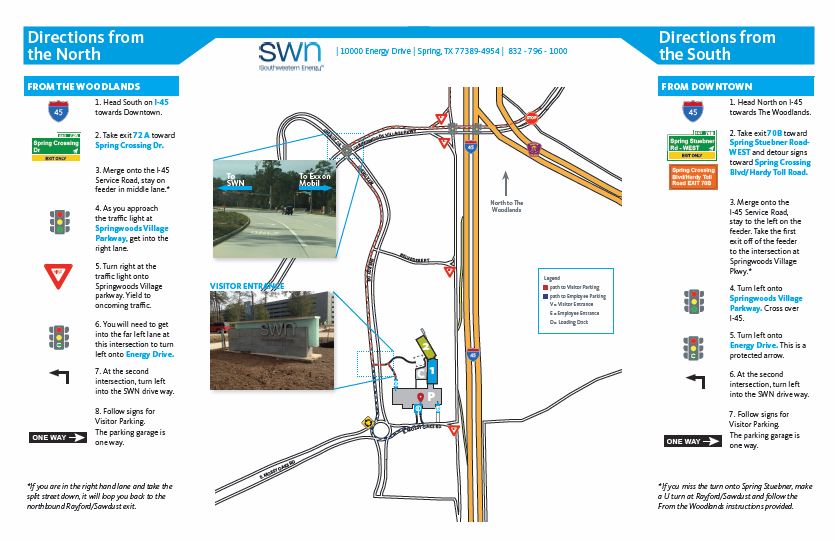
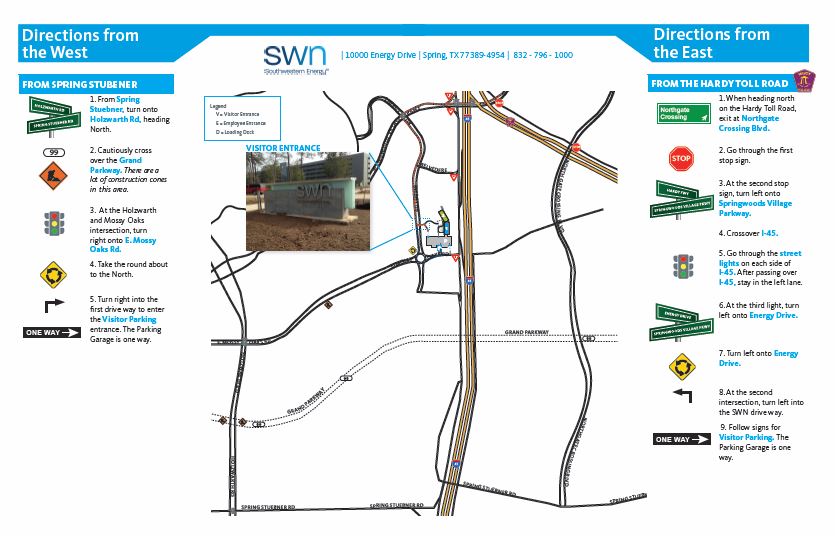
Do you have a hard time attending HGS meetings, because you live or work north of town? There’s now no need to miss out on some of the most informative presentations, and the great networking opportunity HGS meetings provide. To serve our members in the north, the Northsiders’ Group moved their lunch meetings further north to the Southwestern Energy Conference Center.
The Northsiders’ will initiate HGS Encore presentations, when featured speakers will sometimes give encore presentations from meetings in the south, or vice versa, meetings in the south may feature encore Northsiders’ speakers.
We hope to see you at the Northsiders' events!
NEW LUNCH MENU: Includes chicken, beef tips or vegetarian option. As well as coffee tea and assorted sodas.
Northsiders' Cost:
Active/Associate Members - $30
Emeritus/Life/Honorary - $25
Students who are members of HGS - $10
Non-members - $40
Directions for Northsiders' Meeting:
Southwestern Energy
10000 Energy Drive
Spring, TX 77389
The family has requested that in lieu of flowers, please consider making a donation to support her sons' education. Donations may be made to Houston's First Baptist Church, 7401 Katy Freeway, Houston, TX, 77024, with a memo that it is in honor of the Henning Family.
The Wise Report
Henry M. Wise, P.G.
July 26, 2015
Beginning January 1, 2016, the TCEQ Remediation Division will require the use of United States Environmental Protection Agency (USEPA) SW846 Method 5035A, Purge-and-Trap and Extraction for Volatile Organics in Soil and Waste Samples, as amended, for the collection and preparation of solid samples for volatile organic compound (VOC) analysis using purge-and-trap technology. After December 31, 2015, the TCEQ Remediation Division will reject VOC data reported for solid samples, such as soil samples, collected and prepared using another method when the data are intended to demonstrate compliance with the rules in 30 Texas Administrative Code Chapters 334 (Underground Storage Tanks), 335 (Industrial Solid Waste and Municipal Hazardous Waste), or 350 (Texas Risk Reduction Program).
Samples collected for VOC analysis must undergo preparation prior to analysis. The purge-and-trap procedure is the most common preparatory method for VOC analysis, e.g., analysis using SW846 methods 8260, 8021 and 8011. Method 5035A describes the procedures for collecting solid samples and preparing the samples for VOC analysis using purge-and-trap technology. Prior to 1997, preparation by purge-and-trap for both soil and water samples was outlined in Method 5030. In 1997, the USEPA revised SW846 to remove the soil component from Method 5030 and to introduce the new Method 5035 for solids. With that revision to SW846, the USEPA limited purge-and-trap preparation of solid samples to Method 5035, later revised to Method 5035A, and the purge-and-trap preparation of aqueous samples and sample extracts to Method 5030. Beginning on January 1, 2016, solid samples for VOC analysis must be collected and prepared using the Method 5035A procedures.
The TCEQ Remediation Division guidance on Method 5035 has been updated and is available. Please direct questions regarding Method 5035 or the guidance to the Technical Program Support Team at 512-239-2200 or by e-mail at TechSup@tceq.texas.gov.
Henry M. Wise, P.G.
The Wise Report
7/26/2015